


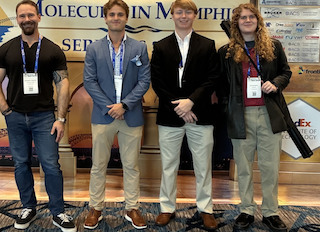
CLEVELAND, Miss. — Three Delta State University students presented research on antibiotic resistance and a plant-derived compound with potential medicinal applications at the 2026 Southeastern Regional Meeting of the American Chemical Society, held Nov. 4-7 in Memphis, Tennessee.
Larson Ingram of Boyle, Parker Lovett of Inverness and Kent Humphries of Fulton presented research posters to scientists and educators from across the region. The students received feedback on their research and learned about scientific studies being conducted at other institutions.
Ingram and Lovett presented research on antibiotic resistance, using computer simulations to investigate potential ways to target an enzyme that helps bacteria resist antibiotics. Humphries presented research examining how plants produce berberine, a naturally occurring compound being studied for its potential medicinal applications.
The conference provided the students with opportunities to share their findings, network with researchers and gain exposure to current developments in chemistry.
“The SERMACS conference was a very professional and well-organized experience that provided numerous opportunities to learn, network, and present my research,” Ingram said. “I appreciated the opportunity to share my work, learn from other researchers, and gain valuable insight into different areas of chemistry.”
Lovett said presenting his research allowed him to receive feedback from experienced scientists and learn about research being conducted across the country.
Humphries also described the conference as a valuable learning experience, highlighting the opportunity to explore current chemistry research in the South.
The students’ research is supported in part by the Mississippi IDeA Network of Biomedical Research Excellence, an National Institutes of Health-supported program that promotes biomedical research and undergraduate research opportunities throughout Mississippi.
Two Delta State faculty members also presented research at the conference. Dr. Christopher Jurgenson, Sullivan-Outlaw Professor of Biochemistry, shared research involving computer simulations and artificial intelligence to explore new approaches to combating antibiotic resistance.
Jurgenson said seeing students develop into independent researchers is one of the most rewarding aspects of his work. He noted that presenting their findings alongside researchers from major universities and research institutions provides valuable educational experience.
Dr. Joseph Bentley, professor of chemistry and chair of the Division of Mathematics and Sciences, presented research on using animations and instructional videos to help students better understand complex chemistry concepts. The project also included contributions from Delta State alumni Alexis Hartley and Jenna Edwards.
“Chemistry is a highly visual science, but many of the concepts we teach involve structures and processes that students cannot directly observe,” Bentley said. “Animations and videos allow us to make those ideas more accessible and engaging.”
In addition to presenting research, the students attended scientific presentations and plenary lectures featuring researchers from prominent institutions.
Dr. Anang Shelat of St. Jude Children’s Research Hospital discussed emerging approaches to treating aggressive childhood brain tumors, including research focused on improving the effectiveness of radiation therapy.
Other presentations featured Dr. Henry Fritz Schaefer III, who discussed how computers are used to understand and predict molecular behavior, and Dr. Susan Richardson, whose presentation focused on potentially harmful chemicals formed during drinking water treatment and efforts to improve water safety.
Jurgenson said the presentations demonstrated the role chemistry plays in addressing significant scientific and societal challenges.