





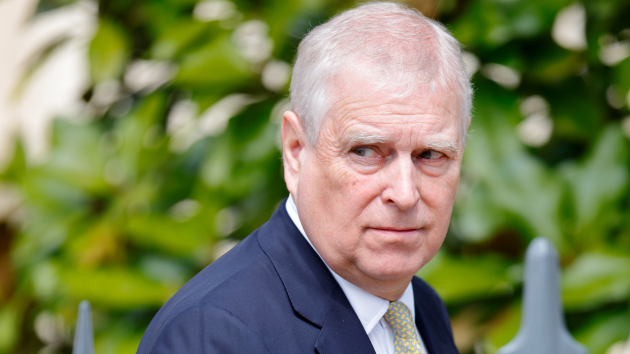
(NEW YORK) — One month after the arrest of former Prince Andrew, the head of London’s Metropolitan Police is pushing U.S. officials for unredacted material from the Epstein files.
In an interview with ABC News’ chief investigative correspondent Aaron Katersky, Metropolitan Police Commissioner Sir Mark Rowley said his office is in communication with the Department of Justice to access the original documents related to ongoing investigations of both Andrew Mountbatten-Windsor and former British ambassador to the U.S. Peter Mandelson.
“Of course, there’s a big body of that evidence … in the United States in all those files and at some stage we’re going to need the unredacted evidence,” Rowley said. “We need the original copy and where did it come from and that’s going to be necessary if we get to the stage of court cases.”
While Department of Justice officials have repeatedly insisted that there is nothing more to investigate stateside about the convicted sex offender and his co-conspirator Ghislaine Maxwell, officials in the United Kingdom are carrying out unprecedented investigations into both Mountbatten-Windsor and Mandelson on suspicion of misconduct in public office.
Emails released earlier this year by the Department of Justice suggested that both Mountbatten-Windsor and Mandelson appeared to share sensitive information with Epstein stemming from their roles as the U.K. trade envoy and business secretary, respectively.
In one email released by the Department of Justice and referenced by Rowley, Mandelson appeared to confirm the timing of an impending bailout with Epstein during the European Union’s sovereign debt crisis.
“It looks like it was shared with Epstein so we’re looking at that as to whether that’s a criminal offense and then colleagues in Thames Valley are looking at other documents that Andrew Mountbatten-Winsor potentially shared,” Rowley said.
According to Rowley, his department is also assessing “a whole range of suggested sexual allegations” to determine if any “merit a criminal investigation.”
Suspicion about Mountbatten-Windsor began years ago following the publication of a photograph showing the former prince with his arm around the waist of Virginia Guiffre, who said she was 17 years old at the time of the photograph. Before she died by suicide last year, Guiffre alleged that Epstein trafficked her in 2001 to have sex with the former prince. Mountbatten-Windsor has long denied wrongdoing and told the BBC in 2019 that the allegations are not credible.
When asked about the allegations made by Guiffre, Rowley claimed that the information they received from Guiffre during four recorded interviews could not support an investigation.
“With Virginia Guiffre, we did four of those interviews with her … .and those interviews didn’t give us any evidence or any allegations of sexual offending or trafficking that we could investigate in the UK,” he said. “That’s why that investigation didn’t go forward.”
However, Rowley said he hopes the renewed look at the allegations against Mountbatten-Windsor helps improve the public’s trust that law enforcement is willing to scrutinize anyone regardless of their title or status.
“Those investigations all go wherever the evidence takes them — quite comfortable with investigating sort of famous or powerful people. I think it’s really important for policing to do that, that sense of operating without fear or favor. The law applies equally to everyone, and those cases will go, say, wherever the evidence leads us to,” he said.
Rowley said the investigation into Mountbatten-Windsor comes as the Metropolitan Police is increasingly targeting sexual and domestic violence.
“We’ve developed tactics to be much more proactive and targeting the most dangerous men who pose a threat to women and children just like we do terrorists and organized crime. So, a combination of factors has seen the rates steadily coming down,” he said. “We’re making big progress and most of all — at the center of all this that matters to me and matters to policing — is trust in the police’s building in London.”
Rowley also touted some of the technology used by the Metropolitan Police to lower crime rates such as facial recognition, which he said has allowed officers to identify violent offenders while minimizing intrusion to the broader public.
While he acknowledged that the technology has raised privacy concerns, Rowley argued that the focus on targeting violent offenders using the technology can help improve the public trust — something he says is foundational to the Metropolitan Police’s 200-year history.
“[Policing] should start from the idea of having the consent of people in a democracy and use the minimum force necessary and be focused on the prevention of crime, and those ideas still guide us today,” he said.
Rowley said he hopes being upfront with the public about the work of the Metropolitan Police — from low-level street crimes to allegations against some of the most prominent people in British society — can renew the public’s trust in law enforcement.
“Policing in the UK will operate without fear or favor, that’s the fundamental principle. I think if you don’t have that, you’re never going to have the trust and confidence of the public in policing, so that’s really important to me,” he said.
Copyright © 2026, ABC Audio. All rights reserved.


