





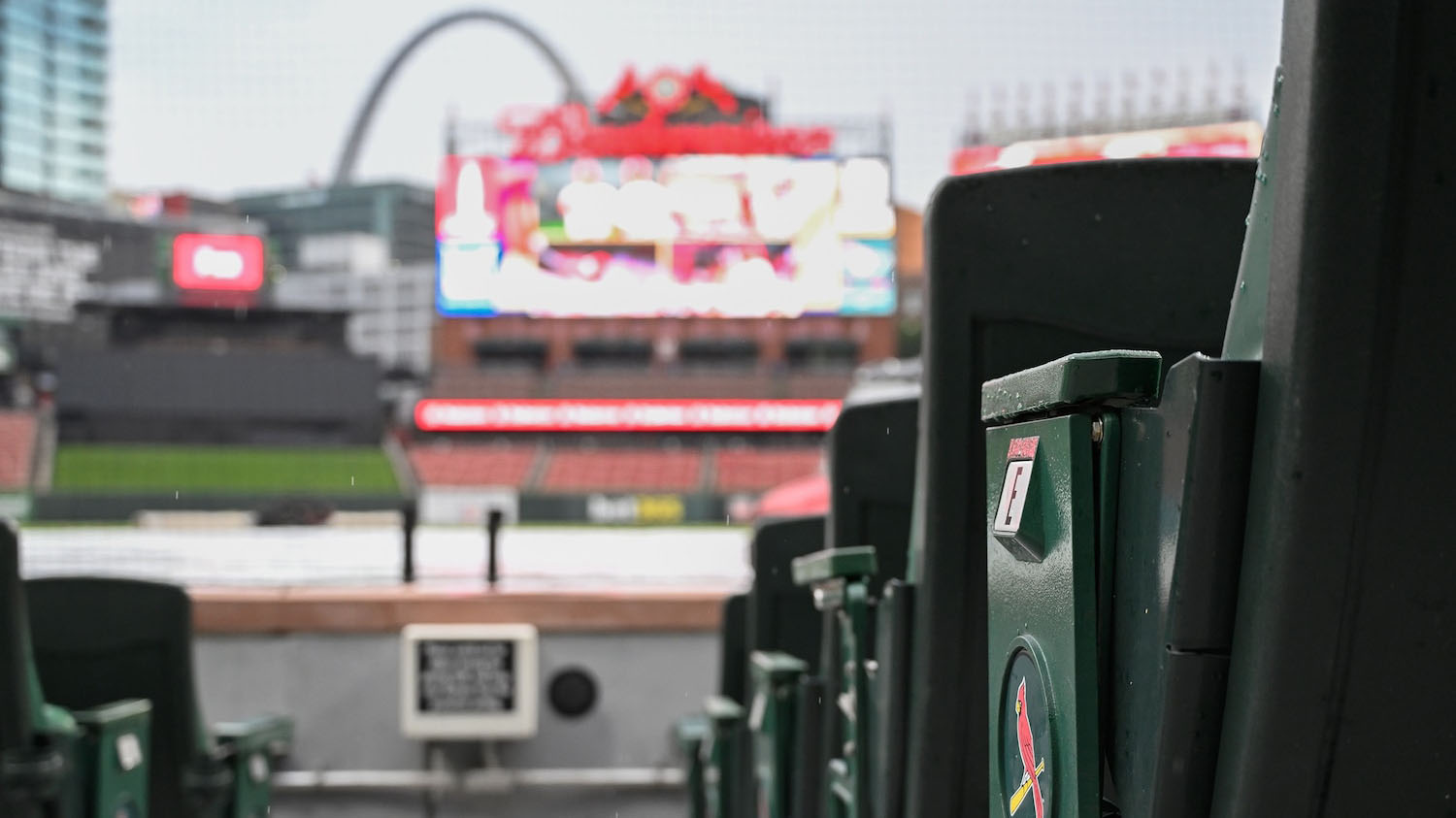
(NEW YORK) — Missouri health officials are warning of a possible measles exposure at Busch Stadium and nearby local businesses in St. Louis and the larger county.
The Missouri Department of Health and Senior Services (MDHSS) said the possible exposures occurred between Sept. 12 and Sept. 14 and included local bars, a cafe, a restaurant, a sandwich shop, a grocery store and a convenience store.
The health department said exposed individuals should monitor for measles symptoms for 21 days starting from the date of exposure.
If symptoms appear, individuals are recommended to contact their local public health agency. Additionally, those who think they have measles should isolate themselves and call their healthcare provider before arriving to be tested.
The MDHSS did not immediately respond to an ABC News request for comment on the possible exposures.
Earlier this month, MDHSS announced a possible measles exposure at a train station in Sedalia, Missouri, after a vaccinated individual boarded a Chicago-bound train on Aug. 27.
About a week later, the St. Louis County Department of Public Health said a second individual who boarded the train on Aug. 27 was confirmed to have measles. The second individual was fully vaccinated and is the first case of measles in a county resident in 20 years, according to DPH.
The potential measles exposures at Busch Stadium and the St. Louis region is the third case linked to “train exposure in Missouri,” the health department said.
“Vaccination is one of the most effective ways to protect ourselves, our families and our community from measles,” Dr. Kanika Cunningham, director of the Saint Louis County Department of Public Health, said in a statement. “We encourage residents to review their vaccination status, monitor for symptoms and contact their healthcare provider before seeking care if they believe they may have been exposed.”
Measles cases in the U.S. have surpassed 3,400 so far in 2026 with cases confirmed in 45 states and Washington, D.C., according to the latest data from the Centers for Disease Control and Prevention.
The CDC currently recommends that people receive two doses of the measles, mumps, rubella (MMR) vaccine, the first at ages 12 to 15 months and the second between 4 and 6 years old. One dose is 93% effective against preventing measles infection and two doses are 97% effective, the CDC says.
However, CDC data shows vaccination rates have been lagging in recent years. During the 2025 to 2026 school year, 92.4% of kindergartners received the MMR vaccine, according to data. This is lower than the 95.2% seen in the 2019 to 2020 school year, prior to the COVID-19 pandemic.
Copyright © 2026, ABC Audio. All rights reserved.


