


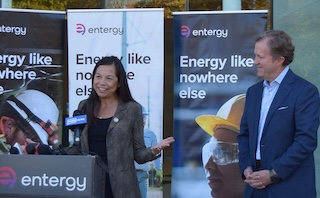
JACKSON, Miss. — Entergy Mississippi has been selected to receive $4.2 million in federal funding to upgrade its transmission system and increase the capacity of existing power lines.
The funding comes through the U.S. Department of Energy’s Speed Power Through Accelerated Reconductoring and Other Key Advanced Transmission Technology (SPARK) initiative. The project will support upgrades along 375 miles of transmission lines in Mississippi.
The improvements will include dynamic line rating technology, which uses real-time information about power lines to determine how much electricity they can safely carry under current conditions. The technology is intended to help utilities use existing infrastructure more efficiently and reduce congestion on the grid.
The grant is part of a $13.7 million federal award announced last month for Entergy and its electric companies in Mississippi, Louisiana and Arkansas. The broader project covers 1,125 miles of existing transmission lines and includes technology installations, geographic surveys, substation and terminal upgrades, and equipment integration.
According to the Department of Energy, the project aims to increase the transfer capacity of selected transmission corridors by at least 25% through real-time line ratings and other operational improvements.
Katie Jereza, assistant secretary for the Department of Energy’s Office of Electricity, said the investment is intended to expand the capacity of existing power infrastructure while supporting reliability and affordability.
Entergy Mississippi President and CEO Haley Fisackerly said the funding will support efforts to modernize the state’s electric grid.
The four-year project is also intended to help utilities accommodate increased electricity demand in areas experiencing business and industrial growth. By improving the use of existing transmission lines, the upgrades could help defer some infrastructure investments and reduce system congestion.
The project also will establish a model for deploying advanced transmission technology across multiple utility service areas. The equipment could be moved to other transmission corridors as electricity demand and system needs change.