


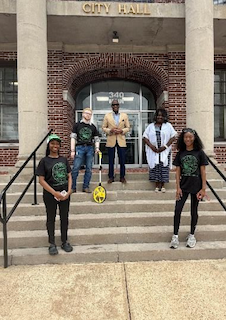
GREENVILLE, Miss. — The City of Greenville is partnering with the MidAmerica Clean Future Alliance and the University of Georgia’s Circularity Informatics Lab to conduct a comprehensive assessment of the city’s waste management and material-use systems as part of a global effort to reduce pollution and strengthen sustainability.
The Circularity Assessment Protocol, known as CAP, was launched in Greenville on June 18 with support from Mayor Errick D. Simmons. The initiative will examine how materials move through the community, identify sources of waste and pollution, and help guide future environmental and infrastructure improvements.
The assessment is being conducted through a partnership between the MidAmerica Clean Future Alliance, or MACFA, and the University of Georgia’s Circularity Informatics Lab. Local student interns participating through the Greenville College Access & Attainment Network will assist with fieldwork, data collection and community outreach.
Officials said the CAP provides communities with a detailed analysis of how waste is generated, managed and prevented. The assessment also identifies opportunities to reduce waste leakage, including single-use plastics that can enter waterways and the environment.
“Greenville is proud to participate in this important assessment,” Simmons said in a statement. “This work will help us better understand how materials move through our community and where we can take action to reduce waste, protect our waterways and support a cleaner, healthier future for our residents.”
Since 2019, the CAP framework has been implemented in 56 cities across 16 countries. Greenville now joins a growing network of communities using data-driven approaches to improve circular materials management and reduce environmental impacts.
As part of the project, student interns will receive training from university researchers and MACFA staff. Their responsibilities will include collecting field data, mapping material flows and engaging with local businesses and residents. The information gathered will contribute to a citywide analysis designed to inform future policy decisions and community-based solutions.
“This project brings together science, community leadership and youth engagement,” said Jennifer Wendt, executive director of MACFA. “By combining global research expertise with local knowledge and student participation, Greenville is building a model for circularity that other Mississippi River communities can learn from.”
Jenna Jambeck, a distinguished professor of environmental engineering at the University of Georgia, said Greenville has demonstrated leadership in addressing circularity and reducing plastic pollution along the Mississippi River.
“We’re so grateful to be able to work with Greenville and MACFA on our NSF-funded SpheriCity project,” Jambeck said. “Greenville has continued to lead in addressing circularity and prevention of plastic pollution along the Mississippi River.”
Project findings are expected to be shared later this year with city leaders, community organizations and regional stakeholders. Officials said the results will help guide strategies aimed at reducing waste leakage, improving recycling and reuse systems, and strengthening long-term environmental resilience.